
Magnus Westling

Assistant professor, food studies, at Örebro University, Grythyttan campus, with a special focus on sustainable gastronomy The key is to reinforce the connection agriculture and gastronomy by promoting cultivated diversity and forgotten species, and building circular flows. It is also about strengthening local value chains, highlighting the true price of food, and giving farmers greater […]
Katarina Graffman

Researcher at the Department of Urban and Rural Development; Division of Political Science and Natural Resource Management In far too many projects and change processes, the most basic factor is overlooked: people. If we don’t understand why people do what they do and not what they say they do, it’s difficult to bring about change!
Karin Gerhardt
Researcher and lecturer (biologist) at SLU, Centre for Biological Diversity, focusing on cereals and organic farming Change the rules of the game for wholesalers/grocery retailers (and the food industry) so that healthier and more sustainable organic food becomes available and visible, and above all cheaper than “regular” food. Organic food should be “normal” food, and […]
Håkan Wallander
Professor of Soil Biology and Environmental Science, Lund University According to my research, the most important thing we can do to transform the food system is to develop perennial cereal and oilseed cultivation.
Christopher Turner
Senior Lecturer in Food Systems and Public Health Nutrition. University of Greenwich / Lund University Food environments are places in everyday life where we encounter, purchase, and consume food. What could be a better place to focus our efforts to improve diet, nutrition, and health? We need to understand lived experiences and design place-based solutions.
Amanda Wood

Researcher at SLU Science tells us what we need to do to transform the food system – now we all need to work together to innovate, experiment, and coordinate our efforts.
Jörgen Larsson
Senior Researcher, Physical Resource Theory, Space, Geo and Environmental Sciences. Chalmers University of Technology Believing that consumers and businesses will spontaneously change their ways is naive wishful thinking. A shift towards a sustainable food system requires committed, knowledgeable and courageous politicians and opinion leaders.
Elin Röös
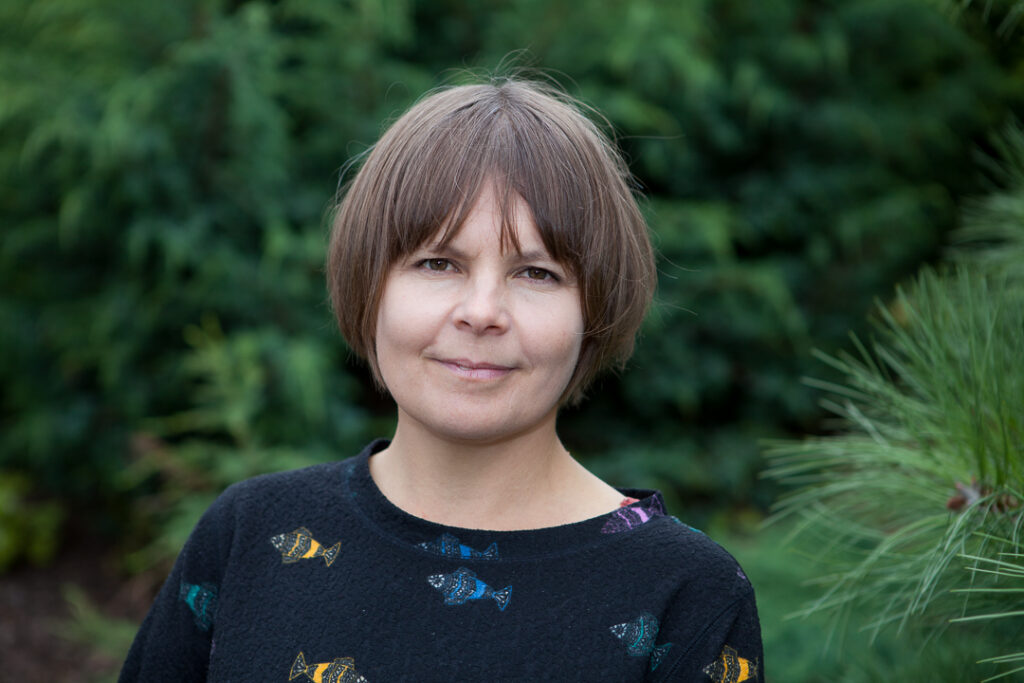
Senior Lecturer, SLU A reduction in the consumption and production of animal-based foods, especially in the Western world. This would reduce climate impact, demand for land and thus deforestation, as well as animal suffering.
Stefan Swartling Peterson

Professor at the Department of Global Public Health The food environment must make it easy (or easiest) to eat right – and that requires many actors and sectors to work together!
Dan Herlin

Vice President, Identity Works, co-founder, Jympa 3000 Who are you? I am an economist and management consultant who became a brand builder and communicator. I am a restless and driven optimist, and I love to mobilize people and create fantastic (impossible) things together. Today, I am Vice President at Identity Works (IW) – one of […]